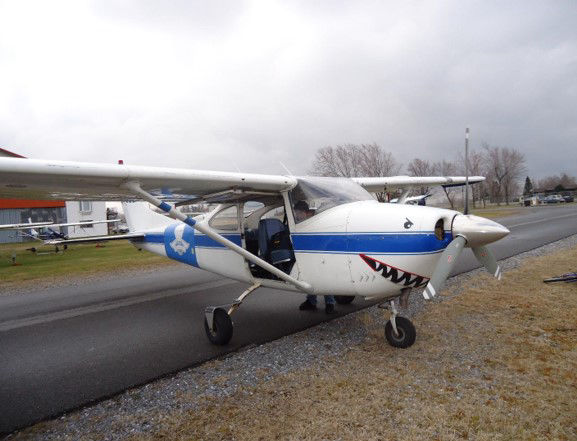
Educational articles written by experienced Jump Pilots from around the world.
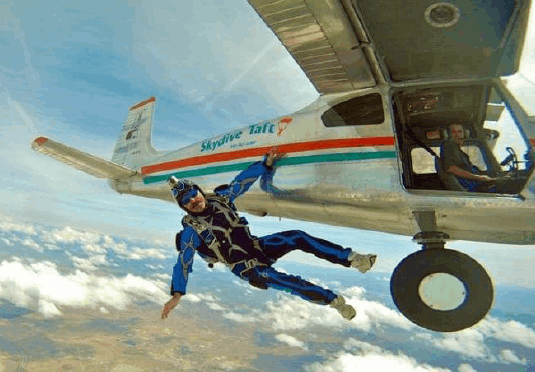
A fatal skydiving accident earlier this year involved a tandem pair and resulted in the death of the tandem instructor, while the tandem student landed under the reserve parachute with minor injuries. While no accident investigation report has yet been issued, it appears the chain of fatal events began with at least one of the tandem pair’s harnesses getting hung up on the Cessna 182’s right main gear leg during their exit. Operators and pilots should look closely at their jump step arrangement, and 182 jump pilots should review exit and “jumper-in-tow” procedures.
This fatal accident highlights the importance of checking your equipment.
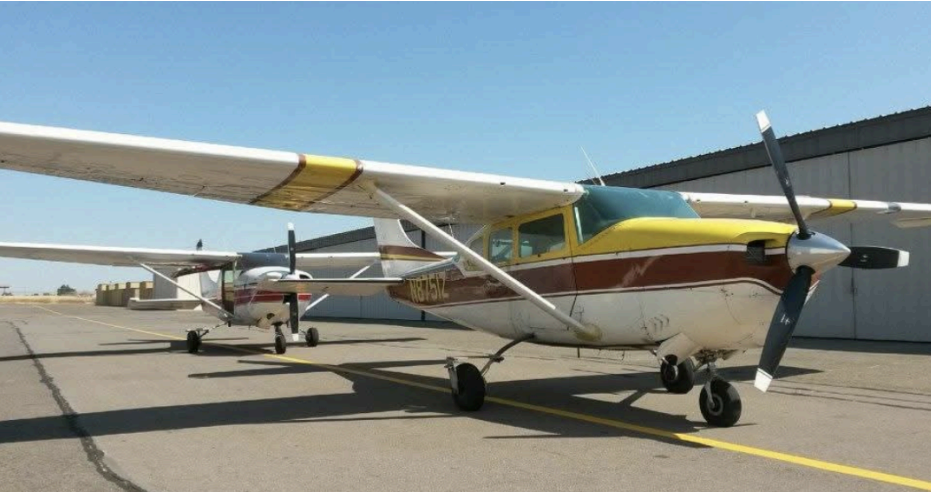
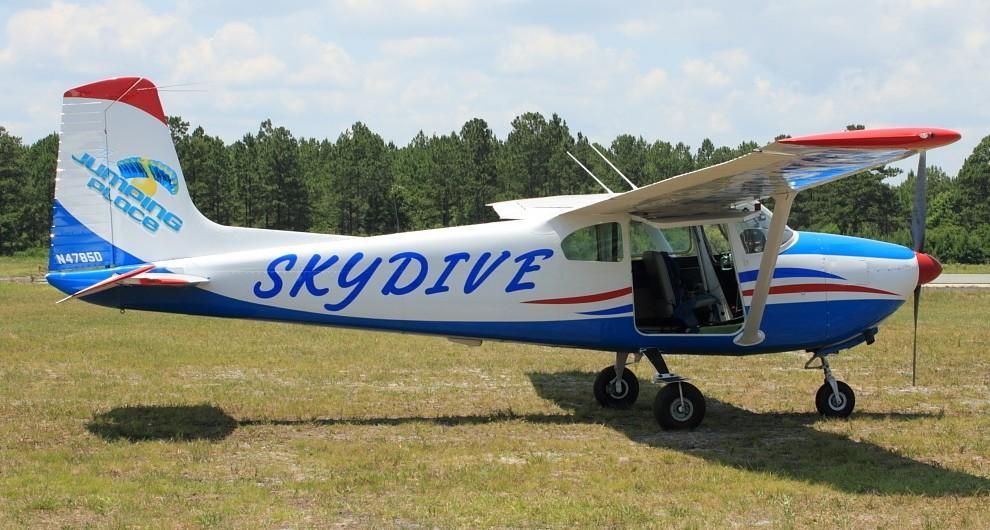
These days, nearly all jump 182s have a skydiver step installed on the right main gear leg to
facilitate jumper exits. That wasn’t the case in the early days of skydiving, when many 182s
were used without a jump door or step installed. (Yes, a 182 can be approved to fly with the
passenger door removed.) Even so, the factory-installed footstep on the right main gear leg
was recognized as a dangerous snag point and was always removed. Without a step
covering the wheel, the pilot had to remember to apply brakes during climbout to stop the
right wheel from spinning and becoming a treadmill for a jumper.
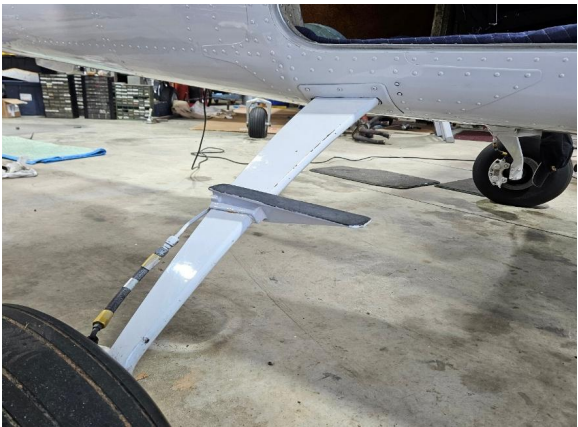
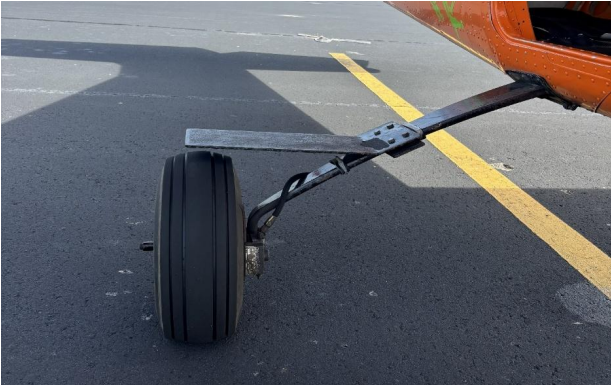
There are two main styles of 182 jump steps. One style is a simple horizontal plate bolted
to the gear leg and suspended over the top of the wheel.
The other style is built with a 90-degree support that bolts onto the wheel hub as well as the gear leg. While they both make an excellent step for skydivers, the simple plate can allow loose material—a harness, jumpsuit fabric, a bridle, etc.—to slip between the wheel and the step, creating a snag. The step with the 90-degree angle closes off that gap and eliminates that particular snag potential. However, both kinds of steps can have sharp edges and other snag points, including the clamp-style arrangement that fastens the step onto the right gear leg. It appears that more than one tandem student harness “Y-strap” has snagged the front inboard corner—near the attach point to the gear leg—of both kinds of jump steps. DZOs and jump pilots are urged to look at your jump step and use an angle grinder to smooth out and round off corners and edges that can snag jumpsuits and parachute components. As always, gear checks before boarding and before exiting help, too.
All 182 jump planes should have a knife on board to cut loose any snagged material or parachute component and free a jumper-in tow. That’s a daunting task when no other skydivers are on board and the pilot must fly the plane while attempting to shed the towed jumper. If the snagged material can’t be cut, a pilot can try some “zero-G” maneuvers to float the snagged jumper and get them loose. Anything is worth a try since there are only two remaining options; both bad. The skydiver might deploy a parachute, which can involve a violent departure (very possibly with aircraft damage), or result in the aircraft and the skydivers descending under the parachute (it has happened). Or the pilot must land with the jumper-in-tow, as slowly and gently as possible on a grass runway or grass beside a runway (that has happened, too).
The Cessna 205, 206 and 207 (45 in. longer) are basically Cessna 210’s with fixed landing gear, hence the original designation was 210-5. The 205 was only produced in 1963-64 and 576 were produced. The 206 is a popular single engine piston powered jump plane, especially the turbo equipped version. A step up from its sister the C182. It is faster, roomier and the “U” models (utility) have a nice sized rear exit door. There are even a few that have been converted to turbine power by the Soloy Corporation.
These jump planes can take up to 5 skydivers to
10,000ft in about 20 mins,
faster in the turbo version. The “U” models have a modified rear exit door
that is made of lexan (a type of plastic) that slides up via an interior track. I
have also flown 206s that have a roll up thick vinyl fabric door with ribs to
keep it ridgid. There is also an STC that allows for a small platform or step
directly under the rear door and handles along the top and sides of the door
for camera flyers or 5-way exits. Operators love the relatively low operating
cost and skydivers like the high wing design.
The Numbers
(T)(U)(P)206 A-G
Skydiver Capacity: 5 skydivers
Empty Weight: A-1795 lbs., BCDE-1725 lbs., FG-2002 lbs.
Maximum Take Off Weight: 3600 lbs.
Useful Load: Approx. 1500 lbs.
Fuel Capacity: A,B,C,D,E - 65 gal. (390 lbs, 61 gal. usable), FG - 92 gal.
Powerplant: Continental IO-520-A (285hp), C (285hp), F (300hp), M (310hp)
TBO: 1700 hrs.
Time to Climb: Approx. 20 mins.
* Always refer to your aircraft POH for the most accurate information. The numbers above are the
most common, but there are 8 different Cessna 206 models. When hired at a drop zone, ask for the
aircraft checklist and W&B sheet for that airplane. If they’re unavailable, download them from
our website.
While drinking your morning coffee, check the Aviation Weather site or ForeFlight for your wx
briefing, including the Winds Aloft forecast. Recheck it during the day. Convert from AGL to MSL
when determining Jump Run distance and direction.
Most jump plane accidents are caused by insufficient fuel. Stick the tanks at the start of the
day and before and after EVERY refueling.
Before Take-Off
Weight and balance is crucial. Don’t exceed MTOW. Fuel for 2–3 loads plus reserves as
required.
All seats except the pilot’s are removed. Seating layout depends on STC seatbelt locations. A TI
will sit with their back against the passenger panel, student facing rear between their legs. A
second TI sits against the back of the pilot’s seat, with the student either facing rear or with
their back against the rear bulkhead (STC dependent).
Typically 2 TIs, 2 students, and possibly a videographer. Heavier jumpers sit forward.
Periodically check fuel selector knob.
All occupants must be seat-belted for taxi and takeoff. Carry a hook knife on you and stow one
accessibly in the aircraft. Skydivers have jumped while entangled in seatbelts or snagged on
gear/step.
Don’t rush. Always verify trim is set to “take-off.” Many jump plane crashes have resulted from
this single error.
Taxi, Takeoff, and Climb
On the first load, do a complete run-up and systems check. For 206s, I use a right-to-left,
bottom-to-top cockpit flow. Check fuel selector, trim, 10° flaps, open cowl flaps, prop/mixture
full forward, engine gauges, and flight controls. Set transponder to ALT. Make appropriate CTAF
call.
Takeoff: Full power, rotate ~65 mph, pitch for 90 mph. If engine fails below 500 ft AGL (some
recommend 1000 ft), land straight ahead.
At 500 ft AGL: Flaps up, accelerate to 100 mph.
Climb: 2500 RPM, 30 in MP, 100 mph. Lean between 4000–5000 ft. Always stay within glide distance
to the DZ using racetrack or spiral climbs.
Jump Run
Be at jump altitude 1–2 miles before the spot. Set: 15 in MP, 2200 RPM, 85–90 mph. (Do not flirt
with stall speed!) Close cowl flaps.
Use Winds Aloft for jump run planning. Spotting takes practice. Notify ATC “2 minutes” and
“Jumpers away in 1 minute over XYZ airport” via CTAF.
Call “Door” appropriately. Build in time for positioning and nervous jumpers. Heavier canopy
altitudes should influence jump run more than freefall winds. Most TI’s deploy at 5,000 ft, fun
jumpers ~3,000 ft, students higher.
Expect significant left aileron due to drag and weight shift.
Descent
We’re doing emergency descents every load. Call ATC “Jumpers away” and “Skydivers over XYZ
airport, 10,000 ft and below.” Raise wing flaps, close cowl flaps.
Descent settings: 15 in MP (bottom of green), 2300 RPM. Use left bank, visually track jumpers
for high deployments. Notify ATC if observed. Keep wide descent pattern if unsure.
Yellow arc airspeeds only in smooth air. Near the DZ, landing light ON, scan for traffic and
jumpers — especially AFFs — they can drift or land on final. Always monitor skydivers until
parked.
Don’t enter their landing pattern. Once they’re down, notify ATC “Jumpers on the ground.” Be
courteous — ATC is your ally.
In Conclusion
If you’re a new Jump Pilot, familiarize yourself with skydiving-related FARs on our Resources page. Ask your DZO if they
have a Training Syllabus; if not, find one on the same page. Also watch the video “Flying for
Skydiving Operations.”
Join our Facebook
group for Jump Pilots — a great resource. If you ever have questions, feel free to email us. We love helping fellow pilots.
Never Stop Learning, Review Often, and Fly Safe — so you can continue to Have
Fun!
Flying skydivers in a Cessna 182 (or a 205 or 206) is a great way to start a piloting career. You can log lots of high-performance time and get paid while you’re at it. And it’s about the most fun flying you can do. Best of all, it’s accessible to low-time commercial pilots.
But be sure you want the job because it can be hard
work and requires huge responsibility. You’ll be expected to be the first one at the drop
zone—often before sunup—to pull the plane out of the hangar, and to fuel, prefight and run
it up, so the plane is ready before jumping starts. If it is good weather and a busy day with
lots of jumps booked, you may fly from sunup to sunset, with breaks only to refuel or relieve.
You’ll learn to eat your lunch during a 20-minute climb. A gusty crosswind? Jump pilots are
expected to handle it. Broken clouds? If there is enough space between the clouds to climb and
descend VFR, and to drop the jumpers in between, you’ll be flying. When the jumpers are done
for the day, the jump pilot will still need to fuel and oil the plane for tomorrow, log the
day’s flights, write up any squawks, then tuck the jump plane away. Oh, and if the morning
weather isn’t so good, you’ll still arrive early and be expected to hang around until
jumping is called off for the day, often not until the afternoon.
Still up for a jump pilot job? Here is how to get
one.
First, produce a one-page resume that is
aviation-focused. It should include your certificates and ratings, total time, and a breakout
listing your time in different aircraft. Provide the flight schools where you trained and
contact info for them. If you have jump pilot training or experience, or Cessna 182 time, be
sure to highlight it. Just briefly list non-aviation training or job history.
Next, get your resume out there. The US Parachute Association website,
uspa.org, has a DZ locator of some 220 DZs around the US, along with web and email addresses.
From a DZ’s website, you can determine which jump planes they regularly fly; if a 182, 205, or
206, go for it! Also check out Chris Rosenfelt’s website, https://avwrk.com/jumpilotjobs.html.
Once you target one or more DZS, send an email with your resume attached. DZ owners get lots
of resumes from pilots without any jump training or experience, or even any 182 time. If you
have any of that, you want it to stand out, so put that in the subject line of the email so the
recipient doesn’t miss it, for example “Trained (or Experienced) jump pilot available,†or
“20-Hour C-182 pilot available.â€
Finally, be the squeaky wheel. DZ owners are extremely busy and they get
lots of emails and phone calls. Follow up to confirm that they received your resume, resorting
to phone calls if necessary. After confirmation, send an email reminder of your interest every
week. If it’s in season and the DZ is nearby, drop in and ask to speak to the owner, leaving
another resume. In short, be bothersome until someone tells you to stop.
Luther Kurtz operates eight DZs around the U.S., using eight 182s and two turbine PAC 750s.
He starts hiring pilots beginning in late February and early March. But he will accept emails
and phone calls before then. In fact, he doesn’t mind if pilot candidates email him every
week. “It shows me that they are interested.†Kurtz looks for pilots with between 300 and
600 hours total time. “Anyone with less than 500 hours should already have some jump pilot
training, such as from Jumpers Away.†He also has a pilot weight limit of 200 lbs., even
though all of his 182s have the Wing-X wing extensions that increase the182’s gross weight to
2,950 lbs.
Kurtz likes to conduct an initial interview by phone, and if that conversation goes well, he
will make a conditional offer and invite them to relocate to the DZ. What’s the condition?
“Ability to fly and attitude. Almost everybody can fly, so I look mainly for a good attitude.
I want pilots who show up on time, are willing to learn and fly the way I tell them to.â€
Steve Alsobrook is the chief pilot for Skydive Key West, which has five 182s and operates
seven-days-a-week year-round. Don’t even call him until you have provided a one-page,
professional looking resume that is aviation-focused. He likes pilots with less than 1,000
hours, “and we’ve had all kinds of pilots with under 250 hours.†If he has a job opening
and likes your resume, he will conduct a phone interview, then maybe invite you down for a
face-to-face. Then he might put you in the left seat for some slow-flight and jump door opening
and closing exercises. Just don’t blow the landing at their 2,700’ x 12’ asphalt strip.
What’s he looking for? “The ability to fly, but also a personality that will fit in.â€
Most DZs in the northern tier of states either close for the winter or slow way down, and
then start back up in April and May, so they will begin hiring staff in January and February.
January is not too early to start your job search. But don’t worry if you don’t get a
job during the spring hiring spree; there is lots of turnover and many pilots are hired
throughout the season.
Now, get that resume together, get it out there, and be the squeaky wheel
until you get that job offer.
Ed Scott is the founder of Jumpers Away, a jump pilot training school in Greenville,
SC.
Introduced in 1956 and built in the U.S., France and Argentina, it is by far the most common jump plane in the world. It is the second most common Cessna that is still in production. The average C-182 is powered by the Continental 230hp O-470 engine (models A-R, years 1956-95) and can take 4 skydivers to 10,000ft in about 20 mins.
They usually have a modified
exit door that swings up like a garage door instead of forward like a car
door. They also usually have a small platform or step over the right main
landing gear. operators love the relatively low operating cost and skydivers like the high wing
design.
The Numbers
(Models A-R)
Skydiver Capacity: 4 skydivers
Empty Weight: 1610 lbs - 1734 lbs.
Maximum Take Off Weight:
â— C-182A-D - 2650 lbs.
â— C-182E-M - 2800 lbs.
â— C-182N-Q - 2950 lbs.
â— C-182R - 3100 lbs.
*Many C-182A-M models have been modified with Wing-X wing
extensions which increase the MTOW for those models to 2950 lbs.
Useful Load: Varies based on empty wt, gross wt, fuel wt.
Fuel Capacity: 65 gallons (390 lbs) - 80 gallons (480 lbs)
Powerplant: Continental O-470-L, R, S or U (230hp)
TBO: 1500 hrs.
Time to Climb: Approx. 20 mins.
The numbers above are the most common, but there are 23 different
Cessna 182 models. Always refer to your aircraft POH for the most
accurate information. When you are hired at a drop zone, ask them for their
aircraft checklist and for the weight and balance sheet for that specific
airplane and ALWAYS verify their numbers. If they do not have checklists or W&B sheets
available, download them from our website.
While drinking your coffee in the morning, always check the Aviation
Weather site, including the Winds Aloft forecast, and keep checking that
throughout the day. When determining your Jump Run direction and
distance, don’t forget to convert from AGL to MSL. Also, most jump plane
accidents were caused by the pilot not having enough fuel onboard. Stick
the tanks before the start of the day and before and after EVERY refueling.
Before Take-Off
Flying skydivers is very challenging and weight and balance is one of the
most challenging parts of it. You should already know not to take-off with an
airplane that is heavier than its maximum take-off weight limit. Most drop
zones want you to fuel for 3 loads, some prefer 2 loads worth plus 30
minutes of reserve during the day.
Cessna 182 jump planes have all of the seats removed except for the
pilot’s seat. The arrangement of how the skydivers sit on the floor is
dependent on which STC your airplane has, which determines where the
seatbelt anchors are located. In ALL types a TI will sit with their back (rig)
up against the passenger panel (Always verify that their rig did not get snagged on the lip of
the panel etc) with a student between their legs facing
the rear of the airplane. In ALL types a TI will be sitting with their back
against the back of the pilot’s seat. The variance is where the second
student sits. Depending on which STC your airplane has (location of
seatbelts), they will either sit facing the rear of the airplane in between the
TI’s legs that have their back against the seat or they will sit with their back
against the rear bulkhead facing forward.
You will normally have two tandem instructors and two tandem students on every load.
Whenever I had a larger than average instructor or student, I
had them sit in the most forward slot. Periodically check to make sure that
no one has accidentally bumped the fuel tank selector knob.
Every person on-board needs to be seat belted for taxi and take-off. Always keep a
hook-knife on you and another stored in the airplane within easy
reach. There have been many instances when a skydiver jumped or fell out
of the airplane with the seat belt still attached to their leg strap or a part of
their rig or suit got caught on the step or main landing gear. If that were to
happen, someone, if not you will need to try to cut them free.
A couple more important reminders are to never get caught up in a “rush modeâ€, that
can lead to you forgetting important items on your checklist.
Which segues to my next important reminder, ALWAYS double check that
the trim is set to “take-offâ€. I remember, right after I started flying skydivers
in 2008 I heard about a C182 jump pilot that forgot to set the trim to
“takeoff†from nose-up and right after rotation the airplane nosed up
sharply, stalled and crashed. No one survived. AGAIN… DON’T RUSH and
READ and DO WHAT’S ON YOUR CHECKLISTS!
Takeoff and Climb
If it’s the first load of the day, be sure and do a run-up and systems
check.Add 10 degrees of flaps for takeoff and make sure that your cowl flaps are open. Make the
appropriate call on CTAF. Takeoff with full power. Remember that if you lose your engine soon
after takeoff and are fully
loaded, you are to land straight ahead, do not attempt to turn back to the
airport if you are below 500 ft AGL. Climb at 2500 RPM and 25 inches MP,
with an airspeed of 85-90 initially.
Check in with ATC as soon as practical. Lower the
nose to keep the CHTs below 390. Start leaning between 4000 - 5000 feet. Always stay within
gliding distance to the DZ, in case you lose an engine. This can be done by
flying a racetrack or spiral climbing pattern, using shallow banking, that
gets wider as you climb.
Jump Run
Get to jump altitude about 2 miles before the jump spot. Your settings for jump
run should be 15 inches MP, 2200 RPM and 80-85 knots airspeed.
(Do NOT flirt with the stall speed! Stalling with skydivers on the step or in the door is one of
the worst case scenarios.) Close the cowl flaps. Your
jump run direction and length will be determined by the Winds Aloft forecast for your area.
Spotting will take some practice, but you will learn it quickly.
ATC will usually want you to give them a “2 minutes until jumpers awayâ€
call. Also give a “Jumpers away in 1 minute over XYZ airport†call on CTAF.
Depending on what the winds are doing, you will call “Door†at the appropriate time.
Remember that they require some time to get into
position to jump and even longer if they have a nervous student jumper.
Also, when calculating your jump run direction and distance, remember to
give more
“weight†or consideration for the wind direction and speeds at altitudes when the skydivers
will be under canopy, because they will be at
those altitudes longer and sometimes the canopy can act as a sail if the
wind is strong enough. Most TI’s deploy around 5000 Feet, Fun Jumpers
around 3000 feet and Student Skydivers much higher.
You will notice that the airplane will require a lot of left aileron because of the
weight shift and drag caused by the skydivers being outside of the airplane on the step
and/or hanging onto the wing strut.
Descent
We Jump Pilots are basically doing an emergency descent on every flight.
As soon as the skydivers drop away, it’s neutral control wheel and full left
rudder to get the door to drop down enough for you to grab and latch it. Tell
ATC, "Jumpers away" and make a “Skydivers over XYZ airport 10,000 feet
and below†call, while simultaneously closing the
cowl flaps and adding carb heat.
Your engine settings should be the same on descent, 15 inches MP and 2200 RPM. Put the
airplane in a left bank, keep an eye on the skydivers as
long as you can to see if anyone deployed high. If they did, ATC needs to
know this information so that they can keep air traffic above that altitude.Also, keep your
circle wide in case you did not see that someone deployed their parachute high.
Keep the airspeed within the yellow arc only if in smooth air. As you get
lower and closer to the airfield, turn your landing light on and keep your
eyes on the skydivers while scanning for other traffic, especially if it is a
very windy day and/or you had an AFF (Accelerated Free Fall) skydiver on
that load. I’ve had them float across my final or land right on my touchdown
zone MANY times. Continuously scan for skydivers from the beginning of
descent until parking. Do not fly near the skydiver's landing pattern. Also,
don't forget to tell ATC, "Jumpers on the ground", they usually appreciate
that. Do them favors whenever you can, they help us every single day and I
believe that most pilots take them for granted.
In Conclusion
To view a Cessna 182Q POH click here. If you are a newly hired Jump Pilot, get familiar with the
FARs that govern
skydiving, you will find them listed on our Resources page. Ask your DZO if
they have a Training Syllabus, if they do not, you can find that as well on
our Resources page. While on that page,
be sure and watch the video
"Flying for Skydiving Operations". Also, be sure and join our Jump Pilot
group on Facebook here. It's another great resource. Finally, if you have
ANY questions at all feel free to email us. We love helping our fellow pilots. Like I always
say, Remember to… Never Stop Learning, Review Often
and Fly Safe, so that you can continue to… Have
Fun!
In the past couple of weeks, several DZs have
indicated their need for Cessna 182 jump pilots. Various aviation segments, from the
airlines to charter, photogrammetry to pipeline patrol, are in hiring mode, causing jump
pilots who have accumulated flight time to move on, creating vacancies at DZs. So, keep
submitting those resumes.
Here are some things you need to ask when get an
interview.
• Is the airplane airworthy and on a 100-hour inspection interval by an FAA-certified
mechanic? (The answer needs to be “yes.â€)
• What is the DZ’s season? Do they close in late fall, like many in the north, or do
they operate year-round?
• Is it at a municipal airport or a private airport? Are the runway length and condition,
and approaches, adequate for a fully loaded 182?
• What days of the week are they open? Weekends only (Sat-Sun)? Long weekends (Fri-Sun)?
Weekends and some weekdays? Are the weekdays full days or partial days, e.g., noon to 5 pm?
• What is the pay rate? $15 to $20 per load ($20 per load is becoming the norm)? Or
different rates depending on whether the load is tandem students or experienced skydivers? Is
there a daily minimum or “show up†fee so you get some compensation in case the weather
interferes? (Those can range from $50 to $100, which may cover the first few loads, after which
a per-load rates kicks back in.)
• Are you paid at the end of each day? Each week? Bi-monthly or monthly? Do
you receive cash or a paycheck? Are you considered an employee, with taxes withheld? Or are you
considered a contractor; in which case you should establish your own LLC?
• Are there additional responsibilities for the job? Are you required to wash or ferry the
airplane? Or perform other DZ duties when not flying?
• Are living accommodations provided or subsidized? If so, is it indeed livable or
instead, is it more like a cot in a hangar or a shared bunkhouse without hot water and no
kitchen?
• Finally, is the DZ owner willing to reimburse your travel expense to arrive onsite for
the initial greeting and, hopefully, orientation flights? Including the return trip should
things not work out?
Try to speak to any other pilots or DZs staff to get a feel for their level of motivation
and satisfaction.
Carefully weigh the answers. There is rarely a gold-plated job with the best of all options.
But if the aircraft and the operation are safe and the compensation and activity level seem
adequate for you, you’ll be on your way to a steady, paid flying job and an ever-growing
logbook. Good luck!
Read
more at JumpersAway.com>>>
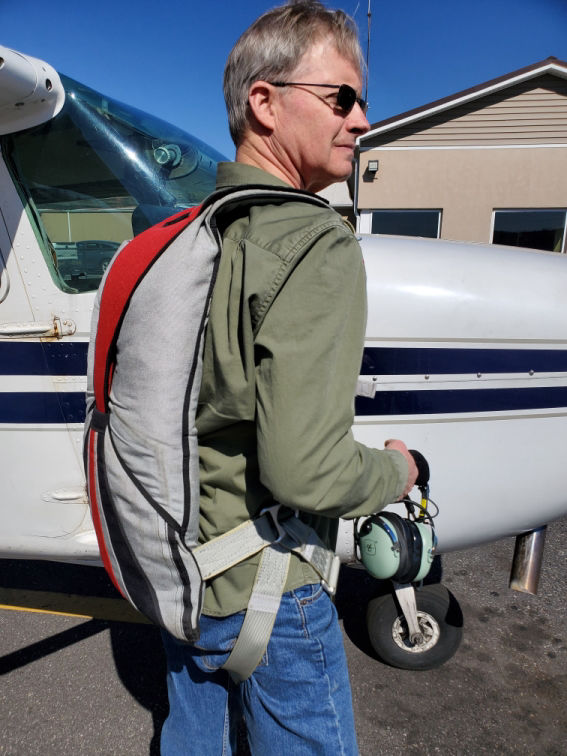
I’m often asked which FAR requires a jump pilot
to wear a parachute. The answer is…none. FAR 91.307 only requires parachutes (with lots of
caveats) when the aircraft intentionally exceeds a 60-degree bank or an attitude of 30
degrees. So why do so many Cessna 182 jump pilots wear parachutes? The requirement comes
within the FAA approval for a Cessna jump door or door-removal modification. The STC or FAA
field approval contains operating/condition limitations that apply with the modification,
such as a limitation on airspeed or bank angle. Usually included is a requirement that the
pilot or all occupants wear an approved parachute when the door is opened. Note the
“usually.†I’ve seen old FAA modification approvals for 182s that don’t include the
parachute requirement, which I believe was an error on the part of the FAA.
What’s an approved parachute? That’s also described in 91.307. It’s any parachute
made under an FAA type certificate or technical standard order (TSO), or a designated
military parachute. Nearly all pilot emergency rigs and sport skydiving rigs are made and
approved under a TSO. Note that 91.307 also says that an approved parachute can’t even be
carried on board unless it has been packed within the preceding 180 days by an appropriately
rated FAA rigger. All parachutes have an accompanying packing data card with a record of the
last repack date and the rigger who packed it.
Is there really a need for a jump pilot to wear an
emergency parachute? There are jump pilots who will answer with an emphatic “yes,†because a
parachute saved their lives when a jump run went wrong. When you have an open door and skydivers
climbing out and hanging off the step and strut, pilot chutes and parachutes can inadvertently
deploy, sometimes destroying an airplane’s flyability and pegging the “Oh s!#t†meter in
an instant. In another scenario, a formation load of two Cessnas full of skydivers famously
collided over Superior, Wisconsin in 2013. Incredibly, all survived, including the jump pilot
who lost a wing in the ensuing fireball and had to use his emergency parachute. (The other pilot
deadsticked to a safe landing.) Many of the skydivers were wearing GoPros, so you can view many
angles of the collision here: AMAZING Skydivers Land Safely After Plane Crash EXTENDED CUT - YouTube.
Why don’t most twin and turbine jump pilots wear parachutes? Those aircraft
modification approvals don’t require it, for reasons I can’t find. Should pilots of larger
jump planes wear a parachute anyway? A certain Cessna Caravan jump pilot would say yes. At
14,000 feet, he had skydivers positioning in the door when a reserve parachute deployed over the
tail, snapping off the empennage. The airplane went into a vertical dive estimated at 16,000
feet per minute. After ensuring all skydivers were clear, the pilot made his way to the jump
door with great difficulty, deploying his pilot emergency rig at about 1,000 feet above the
ground. You can read the Australian Transport Safety Bureau report of the 2001 accident here: VH-MMV Skydiving Accident (atsb.gov.au).
Pilots, if you are going to wear a parachute, it is imperative to get some in-depth
training. The odds of bailing out are low, but if you gotta go, you’d better know, and have
practiced, what to do beforehand.
For most of the jump pilots that will transition
from a piston to a turbine, this will be your airplane. Most of us pilots did our training
in a high wing single engine Cessna which makes the Caravan the easiest turbine to
transition to and another reason why DZOs love it.
The Numbers
Capacity - 17 skydivers
Empty Weight - 4570 lbs
Maximum Take Off Weight - 8750 lbs
Useful Load - 4180 lbs
Fuel Capacity - 332 gallons / 2224 lbs
Powerplant - Pratt & Whitney PT6A-114A 675hp
TBO - 3600 hrs
Time to Climb - approx. 15 mins
Before Take Off
The loading of the Caravan is similar to most other turbine jump airplanes.
There are 2 benches that the skydivers straddle and face the back of the airplane. Make sure
that no one sits in the very back near the back wall, and trust me, they will try and sit there
no matter how many times you tell them not to. It’s not quite as big of a deal if you have a
light load. But I have definitely noticed some CG issues on that with heavier loads.
One of the most critical parts of any Caravan pilots day is avoiding a “hot startâ€. A
hot start is when temperatures rise above 1090 degrees Celsius in the combustion section and
cause internal damage to the engine on start up. You may have a hot start if you have a weak
battery, if the emergency power lever is not stowed or if the bleed air switch was left on. Most
hot starts are the fault of the pilot, it is very rare for a Caravan to have a true hot start.
If you cause one, you more than likely will be looking for another job in the near future. The
engine will need to be removed and tore down for a complete internal inspection at the very
least.
After start up, be sure and check to see that you do not have a fuel imbalance greater than
200lbs. If you do, turn the lighter tank switch off, in order to burn off fuel from the heavier
side. You should burn enough fuel during your taxi and run up to equal things out a little.
Monitor that fuel imbalance in the air as well. I’ve flown a Caravan that liked to drink from
one tank more than the other and I had to constantly monitor that.
I know a lot of us jump pilots fly from rough airstrips, so be sure and make use of the
Inertial Separator while taxiing. It will minimize ingestion of foreign matter into the
compressor. Just be sure and stow it before take off or you will notice a great reduction in
take off power and it is very hard to stow with full throttle.
Take Off
As part of your GUMPSFITS check, add 20 degrees of flaps for take off. Advance
the throttle slow and steady. As with most airplanes, it will let you know when its ready to
rotate, but it’s usually around 70 KIAS because we’re usually heavy. Obviously, when we’re
lighter, it will want to get off the ground sooner or at a lower airspeed. Climb out initially
at around 90 KIAS and then lower the nose to 100 KIAS, which is slightly less than Vy (104
KIAS). That speed seems to work the best for the C208B. As with any jump plane you fly,
initially you should experiment with different airspeeds while timing yourself. Your torque
should be Max. until ITT or Ng limit. Retract flaps 10 degrees at a time starting at 1000 ft
AGL. Check in with ATC.
Jump Run
Once on jump run your airspeed should be
at 85 KIAS, your flaps at 10 degrees, torque between 600-900ft-lbs and prop RPM at 1850. It will
be possible to lower that airspeed and RPM slightly as you get more comfortable flying this
airplane. At about 2 miles out turn the red door light on. Make your 2 minute call to ATC and
then a 1 minute call on CTAF. Turn on the green jump light. While the jumpers are exiting, make
sure that your tail never gets low. I have personally never had a skydiver strike the horizontal
stabilizer of the Caravan, but I have heard of it happening.
It is important to note that a lot of Grand Vans have a front float step and you will notice
that if someone is on it they will be very close to the left flap trailing edge. I have had
inexperienced jumpers on that front float step bend the corner of the flap with their rig. Brief
your video and fun jumpers not to lean up against the flap. Luckily most DZs will only allow
experienced jumpers to use the front float step but even some of them do not realize how easily
they can bend it.
Descent
We jump pilots are basically doing an emergency descent on every flight. As
soon as the last skydiver exits, put the flaps up, power to idle and jump light off while
simultaniously lowering the nose. Constantly scan for other air traffic that might be in the
area and/or any skydivers that might have pulled high. The maximum cargo door open airspeed is
155 KIAS. Your descent rate will be around 5000 ft/min. If it’s your last load of the day, be
sure and thank ATC for all their help. They appreciate it and it’s the least we can do,
considering that they look out for us every day. For landing, use full flaps unless it’s
windy. After landing, again, if you’re on a dirt or similar airstrip, use the inertial
separator.
If your’re a new turbine pilot be sure and read the book The Turbine Pilot’s Flight
Manual. Most pilot’s that have moved up to the turbine world have read it and highly
recommend it. Also, for the new Caravan pilots, be sure and read Caravan - Cessna’s Swiss
Army Knife with Wings.
To learn more about the mighty Caravan, check out
our affiliate site dedicated to it, CaravanNation.com
After more than 6 years of flying skydivers
I thought that I would write an article for anyone that is thinking of becoming a Jump
Pilot. I will start by telling the story of the day that I first heard of this world, my
first day on the job, followed by a lot of information that you need to know about this
exciting job.
So I had just finished up the training for my Commercial Certificate and I was
hanging out at my pilot school and I ran into Cody my flight instructor. The jokster that he
is, said "What are you doing here?", "Why aren't you out getting paid to fly, that's what
your Commercial is for!" We laughed and I said, "I JUST got it, plus no one is hiring
anyway".
He informed me that I was wrong and that I should
check out a certain website and how "at this time of year they're hiring Jump Pilots big time!"
To which I said, "What is a Jump Pilot?" Again we laughed and he informed me that Jump Pilots
fly skydivers up to altitude and kick'em out! I was instantly intrigued.
That very night I checked out the site he mentioned and sure enough, I found drop zones
(places where skydiving operations are conducted) all over the country that were hiring! Some of
which were ONLY requiring 300TT and a high performance endorsement! I started calling the phone
numbers and the first 3 ads that I responded to ALL hired me over the phone!! Not only that, but
they were asking me "When can you start?" I was like... ummm... can I call you back?...lol This
was all happening SO fast! But then again, I like fast! So after thinking about the pros and
cons of each drop zone , I decided to fly for Capitol Skydiving near Austin, TX. Within ONLY one
week of Cody telling me what a Jump Pilot was, I was in my car with everything I could fit in
it, moving half way across the country! I will never ever forget how excited I felt driving to
my first drop zone! You can not put a price tag on that joy.
As I drove through and past the city of Austin, following the directions to the drop zone, I
quickly realized that (unlike L.A. where I'm from), after you get 10 minutes out of any city in
Texas you can QUICKLY find yourself in cow country! I was like "What the..." I even pulled off
the road thinking that I had made a wrong turn or something. I called the DZO (drop zone owner)
and told him where I was and he said, "You're on the correct road, just keep going down that
road until you see some big red balls on a power line and that's where we are." I was thinking,
oh crap, did he just say "balls on a power line"? That's never good. Did they belong to the last
pilot?...lol
I drove up, walked in the door and the man said, "You must be Chris?" I said, "Indeed I am
and you must be Mike!" Within 10 minutes of small talk greetings he walked me out to the Cessna
206 (with the cargo door removed) and said, "Now show me that you know how to fly this
airplane!" I was like (hard swallow), "alright". Now, I MUST explain something first, I had
never been in a situation even remotely close to this one. This was a private airport (TE96),
with a dirt runway, 2600 feet long by 30 feet wide! With power lines running across the
threshold of the runway! Remember? The ones with the big red balls on them?...lol PLUS, I
quickly discovered why that airport is called "Crosswinds" airport! Yikes! I was use to flying
at Long Beach airport, runway 25L is roughly 5000 feet long by 100 feet wide! No dirt, no power
lines! By the way, this is a good point in my story to tell all the younger pilots, during your
training, go out and explore small, distant airports! I wish that I had done more of that in my
training. Always challenge yourself, never ever get complacent.
So, my new boss Mike asked me to fly him to a local airport and do some touch and goes. To
get familiar with the C206 on a hard surfaced runway before landing at his grass strip airport.
As we flew to local Taylor airport, I looked down at the ground and realized, yikes, there's not
very many landmarks down there! It looked like a giant quilt... farmland. I hope you're starting
to understand why flying to unfamiliar airports during your training is so important. I'm flying
my new boss in his airplane, thinking, he is going to ask me to fly him back to Crosswinds
airport and I don't think that I'm going to be able to even find it! And no, there was no GPS in
the airplane at that time. I nailed my touch and goes and then, sure enough, he said "Now take
me back to Crosswinds".
Luckily I had noticed 4 large grain elevators kinda near the approach end of the little
airport. I was scanning for those sucka's big time! I wanted to show him that I could get us
back there without asking him or ATC (he told me not to bother them). I found the grain
elevators! To this day, I have never been SO happy to see some grain elevators! They led me to
the airport! Now, I had to deal with the dreaded power lines! All Mike said was, "I don't care
if we have to go around, just don't flirt with those power lines, I lost one pilot to those
already". Yeah, that wasn't distracting or anything...lol It sure wasn't funny at the time, but
it is now.
So, I am happy to say I nailed 3 touch and goes there as well! I parked the airplane and
tied it down. He said, "I'm very happy with your flying", "I want this airplane pre-flighted by
8am, you'll have your first load of skydivers at 9am." and walked back into the office. I'll
never forget that shock! The words that came out of my mouth to him were, "Sounds good!". But
inside I was like... wait... what about... what the... did he just say? Again, this is hilarious
now, but at the time it was straight craziness!
Needless to say, I didn't sleep much that night and not just because I was in a completely
new environment. I remember thinking, "Am I really gonna drop people out of that airplane
tomorrow?", "Like really?", "Are the skydivers going to be nervous that a rookie is flying
tomorrow?" By the way, the answer to that question is... hell yes!...lol Most skydivers are
sketchy of new pilots. Yes they do make them nervous, which is completely understandable. Most
TI's (tandem instructors) and Videographers have spent many more hours in airplanes than rookie
Jump Pilots and they will watch your EVERY move. But it's smart of them to do and I'm glad they
do it. They tend to sit a little bit closer to the door when a newbie pilot is flying. If you're
a good pilot and you have a good personality you will be welcomed into that drop zone family
fairly quickly, and it truly is a family too! We all work together... I mean "fly" together,
look out for each other, go out to dinner together and play together. You TRULY get to know each
other. Some of them will be lifelong friends of yours.
Requirements
Most of the Jump Pilot hiring is done in the months of March and April. You will find a few
drop zones that will hire you with a minimum of a Commercial Certificate, 2nd Class Medical and
300TT. That number, by the way, is a bare minimum and most drop zones require at least 500TT due
to their insurance policies. They will also have a pilot on hand to train you how to fly
skydivers. For more information on training check out my Training
Page.
Not all pilots will cut it. Through out the years I have had to let a few pilots go that
simply could not get it. I even remember one of them that was too freaked out that we have to
open the door during flight. Um... yeah... we HAVE to open the door or they can't jump out
silly...lol NEXT!
There are a few drop zones that will hire you into a Caravan or PAC 750 if you have at least
1,000 TT plus 25 hours in type, and jump pilot experience, again per their insurance
requirements. I love the Caravan and have created a site to help Caravan Pilots, Mechanics and
Owners, you can find it here. The
Caravan is the most popular turbine jump airplane worldwide. Check out my Skydive Aircraft list here for more information about all of the various
jumpships!
Pay and Perks
You will fly approximately 100 hours per month. The amount of hours flown per month varies
depending on what month it is (June-August is peak), whether you are the main pilot or a
back-up, if your drop zone is newer or older and established. Weather will obviously also play a
role. A Cessna 182 (the most popular jump plane worldwide) can do 2.5 loads per flight hour up
to 11,000ft MSL. If you are flying less loads than that per flight hour you are doing something
wrong. By the way, my record amount of loads in a C182 is 23 loads in one day! Crazy huh? At
$15/load, not a bad payday.
During the off peak season you will be flying less than half of what you were during the
Summer. So I highly recommend that you have some supplemental income coming in. Most northern
drop zones are closed Oct - March. Drop zones in northern states that have larger aircraft ie.
Caravans, PAC 750s or Twin Otters lease those to southern drop zones that only have 182s or
206s. When the larger aircraft are leased to other companies, the leasing company usually
provides the pilot not the leasee. I've worked for companies on either end of the spectrum. And
that is another huge perk to this job, if you happen to be flying a smaller jump plane at a drop
zone that decides to lease a larger one, you can get your hands on that larger aircraft at zero
cost to you! Before I was hired to fly them, I had flown many Caravans and Twin Otters from the
right seat during skydiving operations. The pilot's will usually instruct you while you fly it.
Side note: It would be in your best interest to buy that pilot a "beverage" or two at the end of
the day. That is, only if you would like to sit right seat again.
Challenges
Flying skydivers is very challenging and weight and balance is one of the most challenging
parts of it. You should already know not to take-off with an airplane that is heavier than it's
Max. Take-Off weight limit. For a C182 I believe that it's 2950lbs. Plus you have the whole
weight shift during flight issue, when they move from a seated position to an exit position. In
a Cessna 182, you will often have 2 skydivers hanging from the right wing strut plus 2 more
hanging out of the doorway. Talk about parasite drag! When they are hanging on the strut and in
the doorway, the control wheel is fully to the left and opposite rudder. You MUST watch your
airspeed! Skydivers have been killed because the pilot stalled the airplane with skydivers in
the doorway. They lose their grip on the wing strut and end up getting struck by the bottom of
the wing or the leading edge of the horizontal stabilizer.
After they drop away, its neutral control wheel and full left rudder to get the door to drop
down enough for me to grab and latch it. Tell ATC, "Jumpers away", close the cowl flaps and then
I would put the airplane in a left bank, keeping an eye on the divers the ENTIRE time and then I
put it into a slip. Alternating between right and left slips. This can be accomplished without
over stressing the airplane. We slip the airplane to descend faster and to avoid shock cooling.
There have been debates in my Jump Pilot group on whether or not we should slip the airplane on
the way down. I can tell you that I've flown over 6,500 loads of skydivers and it worked great
with zero problems. But if the DZO doesn't want you to slip it, then don't do it. You do not own
that airplane and you should respect their property.
I keep the airspeed within the yellow arc. The VSI is pegged, but I'm guessing around
3,000 fpm. It is very important to keep your eye on the skydivers the entire time, while
scanning for other traffic. Also, don't forget to tell ATC: "Jumpers on the ground", they
usually appreciate that. Do them favors whenever you can, they help us every single day and I
believe that most pilots take them for granted.
Whenever I've been hired at a new DZ, I have always arranged a meeting with the local ATC
facility. I feel that it is important to personally meet the people that protect us everyday,
thank them and shake their hand. It is also important to ask them what we as Jump Pilots can do
to make their jobs easier. Maybe I have an "old school" approach but I believe that it's a
school that's respectable and always appreciated by the Controllers that I meet.
I must add the fact that I love the positive energy at drop zones! Everybody is having fun
and most skydivers are passionate about what they do as I am about flying them! According to my
log book, I have flown over 6,500 loads of skydivers and I have smiled EVERY single time they
have jumped out! After more than 6 years of flying skydivers, I still think... dude, those
people just jumped out of your airplane! As I hear their screams fall away...lol How can you not
smile about that? I hope this article helps a few young birds decide if they want to become a
jump pilot! It's definitely not for everyone. It's only for cool pilots!
~Blue Skies, Christopher Rosenfelt
If you have any questions about this or any of my other articles, feel free to email me
anytime at chris@caravannation.com
This article is in no way a guide to being a
jump pilot, this is written to show the rotary side of jump flying for both pilots and
jumpers as the helicopter is a rare visitor to the drop zone. In this article I've tried to
guide the reader through the various stages of arrangements, phases of the flight and the
individual problems and pitfalls of helicopter jump flying. If you want to learn to become a
jump pilot go ahead and contact your local parachute authority as they'll have the relevant
material to cover for jump pilot training. I hope the below helps both pilots and jumpers
understand the principles of helicopter parachute operations as I've found there's a severe
lack of resources and training material for the helicopter jump pilot!
irst of all, a little bit about the helicopter and
why the appeal to use it as a jump platform? Most fixed wing guys would describe them as 'the
dark side of aviation', 'a million bolts flying in lose formation', and I've even been told by
the guy who taught me jump flying that by flying rotary I'd be going straight to hell! Joking
aside if you ask any rotary pilot they'll explain to you the attraction of the helicopter, the
ability to lift vertically, hover and manoeuvre laterally. But the appeal of the helicopter as a
jump platform isn't about what the pilot likes, it's the jumper! From the jumpers point of view
it's a toss-up between the appeal of jumping an unusual aircraft, and the unique exit experience
a helicopter gives. With the low airspeed on the run-in, this gives the jumper the sub-terminal
exit more commonly experienced from a base jump.
To make a start we've all heard the saying 'the weight of the paperwork has to match the
weight of the aircraft before you can go', this applies just as much here! Before any jumping
has even been thought of, it’s important to make sure the relevant paperwork and
authorisations are in place before you carry out helicopter parachute operations. What's needed
may vary from country to country depending on your Civilian Aviation and Parachute authority.
I'd advise researching heavily into what applies to you the pilot, the aircraft and the
parachutist before you think about carrying out any kind of drops. For a pilot in the UK he/she
must hold the appropriate licence/rating to operate and to be in command of the aircraft, be a
BPA approved jump pilot and cleared on the aircraft he/she is going to be operating for the
parachuting role.
With reference to the helicopter or any aircraft carrying out parachuting it must be
approved to carry out such operations, normally in the form of a flight supplement which has
been prior approved by your relevant civilian aviation authority. This supplement may state any
modifications made to the aircraft, door removals, and thus any airspeed or flight conditions
that must be adhered to during the jump role. Finally for the jumper most drop zones put a
licence and jump limit on anyone taking part in helicopter jumping, this is quite rightly so due
to the complexity and the extra skill needed to carry out a helicopter jump. After the above has
been said I'd just like to again emphasise that you must research the exact requirements needed
for your particular location and operation, I've deliberately kept away from exact details as
this article is more about an insight into helicopter parachute operations rather than
definitive rules and regulations.
One final thing to be said about paperwork is the all-important weight & balance, look
closely into the weight limits and envelope of your particular helicopter and any changes
that'll occur through all phases of the flight. I'm not suggesting W&B is more important in
the rotary world compared to fixed wing as it's vitally important in both roles, but in the
rotary role the limits are very much more restricted and envelopes very much smaller. Thus 4
jumpers exiting from a Jet Ranger will have a larger effect on CofG and control forces needed to
counter it, than it would in a fixed wing aircraft. The other aspect to think about in rotary
operations is lateral CofG, this is where smooth jumper exit and exit order come into play. For
example on a B206 with the pilot sat right seat and 2 jumpers exiting on the right side might be
within CofG limits but would cause severe control inputs while they're at the door and upon
exit, unable to guarantee a smooth and stable jump run.
To put simply the helicopter pilot really gets to feel the difference between a light
and heavy jumper and the control inputs needed on exit! It's important to sit down prior to
jumping and work out suitable exit orders to ensure the safest and most stable way for all
jumpers to exit the aircraft, this will vary on type, number of jumpers and pilot judgment. Also
with some helicopter types there will be CofG and airspeed limits when the doors are removed.
This is due to the way the air flows around the fuselage with the doors off, the rearward CofG,
the effect on the directional stability of the airframe, the compensatory effect then needed
from the tail rotor and cyclic inputs needed. As a result directional control may not be
possible above certain air speeds and at certain CofG positions! With all this said I'd
recommend running up w&b schedules for all possible jumper/fuel configurations through the
day, this way you'll know what you can and can't do as things will typically change throughout
the jumping day.
With the paperwork in order and your weight and balance figured out, what now? A very
important source of information for both the pilot and the jumper is a proper briefing. This is
an excellent opportunity to pass your requirements ascertained from your weight & balance
calculations as to jumper numbers and types of exit. This is also a chance to run down the
all-important safety briefing, what the jumpers do in an emergency may vary greatly between
fixed wing and rotary and they must be completely clear as to what they should and shouldn't do.
The briefing should include both what to do in an emergency and normal operations, for example
how jumpers enter the aircraft during rotors running boarding, sounds simple but it's all too
easy to walk into a tail rotor which is conveniently placed at head height! This is also a good
opportunity for a question & answer session between the pilot and jumper, you'll more than
likely get the typical questions like 'can we hang off this?', 'can we hang off that?', it's
essential that you make everybody clear as to what they can and can't do as you don't want
questions being asked while the pilots busy on the jump run.
Typically with a helicopter a jump light system may not be installed so a system to
notify the jumpers as to when they're on the jump run, when to climb out and exit the helicopter
needs to be agreed on. With the pilot normally sat in close proximity to the jumpers verbal
warnings usually work, but everybody needs to be clear exactly what the verbal warnings will be
and when they'll be given to save any confusion once airborne. Before the jumper gets into a
helicopter to do a jump, it's probably a good idea to look over the aircraft while it's on the
ground and shutdown. This will give them a chance to appreciate the major differences between
rotary and fixed wing. The first thing a jumper may notice is the severe lack of space! Unless
you happen to be really lucky and get jump a chinook, you're more than likely to be jumping a
4-5 seat light helicopter, maybe a B206 Jet Ranger or R44. I'd recommend sitting in the
helicopter prior to jumping with a rig on to get used to your sitting position and how to
operate the seat belts. Once you've figured out the basics think about where the handholds are
and how you'll transfer yourself from sat in the door to your exit position, this might sound
easy but when the time comes to exit it'll be the difference between a smooth exit and what's
technically known as a cluster f**k! Ruining the experience for yourself, your fellow jumpers
and not to mention making the pilots job a whole lot harder as you faff about in the door!
A very important point to note are the additional snag-up points with a helicopter, door
fixings, earthing points, skid supports and skid wheel attaching points are to name but a few!
This emphasises the point about looking over the helicopter before the jump, chat with the pilot
as he'll be able to point out the most obvious hang-up points and the parts of the helicopter
you should be looking for and avoid during the exit.
Once you're familiar with the seating, seatbelt usage and snag points it's time to think
about the exit. Once again sit in the helicopter beforehand and plan the exit strategy and
order. Will it be a single jumper exit, multiple exits, in what order and what type of exit?
This will vary hugely on the type of helicopter you're jumping for reasons I'll explain later.
My best advice for this is to speak to the pilot, he'll know the limits of the helicopter type
and the preferred exit type and in what order to maintain a balanced and controlled exit for
yourself and the aircraft. During the exit for smaller helicopter types it's vitally important
jumpers are aware not to 'push-off' from any part of the airframe, it must be a 'fall away'
exit. This is due to the fact the helicopters fuselage is supported under the rotor disc just
like a pendulum and any outside force pushing on the fuselage will create a swinging motion and
control problems for the pilot and an uncomfortable exit for following jumpers. Smooth exits are
the order of the day when it comes to helicopter jumping!
Having dedicated ground crew may also be a good idea as invariably jumper loading will
be done rotors running, having someone to guide them on and get them strapped in helps greatly.
Due to the smaller fuel capacity and likely weight restrictions hot refuels may be needed, a
ground crew will help with this and save valuable turnaround time. Whatever your ground handlers
job he/she needs to be briefed just as much as the jumpers, particularly in emergencies and any
relevant hand signals used during the ground handling phase.
Ok, so the paperwork, weight & balance and briefing are all complete and everybody is
clear as to what do to and when. Time to start up, as with all jump flying you're more than
likely be departing close to the helicopters MTOW. Careful thought needs to be taken as to the
type of departure you'll be making depending on the conditions at the time, wind, temp, a/c
weight, local obstacles and noise abatement need to be taken account of. Check your flight
manual and make sure you're aware of your machines torque/power limits at all phases of flight,
this is especially important for the helicopter when lifting/maneuvering at low level on the
airfield. This is due to the power required to keep a heavily laden helicopter hovering at slow
speed, and the additional power requirements needed to make turns with the tail rotors
requirement of engine power. I personally try to ensure the pickup point is into wind and clear
of obstacles for a straight out departure, thus easing the workload on the engine and making my
job a whole lot easier! For a rotary departure it's important to try and remain clear of certain
parts of the Height/Velocity curve. Any helicopter pilot will explain to you that during single
engine operations, certain Height and Airspeed combinations will give unfavourable conditions
for an autorotation in the event of an engine failure. Remain clear of these combinations as
much as you can giving yourself the maximum possible chance to recover in the event of an engine
failure, I'd also recommend scouting the airfield surroundings for ideal set down points if you
have an engine failure or other technical problems on the departure phase.
Once airborne and climbing it's important to have a predetermined pattern to follow to
reach the jump run and exit point, this will hopefully keep you clear of other air traffic and
possibly other jump ships and drops running alongside your rotary parachute operations. After
all parachutists under canopy and helicopters don't mix! This is best arranged with a prior
briefing amongst yourself, your fellow jump pilots and the DZ controller so you all work
efficiently together through the day. On the climb-out and the doors off it's tempting for the
jumpers to dangle legs, cameras etc out of the door, this should be discourage wherever
possible, this is to avoid anything departing the aircraft and hitting the tail rotor with
obvious serious consequences such as tail rotor failure! It's also worth mentioning that
parachutist line checks must be strictly adhered to before climbing into the helicopter for the
very fact doors are open during flight and thus the increased danger of premature canopy
deployment and hang ups.
Although a premature deployment and hang up is a serious situation in both fixed and rotary
I'd argue that it's more likely to lead to an incident when on a helicopter with the additional
rotating aerofoils and the proximity to these and the jumpers. In this situation the helicopter
then has the reduced ability to maintain aircraft stability compared to fixed wing and should a
canopy be cut away you then pose the risk of a main/tail rotor strike and failure. In this event
it's important that any remaining jumpers smother the pre-deployed canopy to reduce the chance
of any part of the canopy exiting the aircraft, leaving anything hanging outside the aircraft is
strongly discouraged for the above mentioned reasons. Simply said with hang ups and premature
deployment prevention is better than cure, parachutists check your gear before boarding and
pilots ensure everybody is properly briefed on airframe snag hazards!
As with both fixed and rotary both types face the chances of an engine failure, this can
happen at any phase of flight and the pilot must be happy he can deal with this as per his
emergency drills at all times. While most fixed wing pilots might think that when the helicopter
experiences an engine failure it just drops out of the sky like a brick.....fortunately for
rotary pilots and their passengers this isn't so! While the procedures for engine failure on
rotary aircraft differ to fixed wing the basic principles remain the same, maintaining control
of the aircraft and find a suitable place to land the aircraft safely. In this fact helicopters
have an easier time than fixed wing with the ability to set down in relatively small and
confined areas. With an engine failure in a helicopter the procedure is called an Autorotation,
a short explanation of this is where the helicopter uses the airflow from the decent to maintain
rotor RPM, thus it's the airflow rotating the rotors rather than the engine. This is completed
at the end with a flare and a hopeful smooth set down, with the pilot keeping careful control of
the rotor RPM throughout all phases of the Autorotation. Another situation unfamiliar to fixed
wing pilot is a tail rotor failure, which at some phases of flight can be worse than an engine
failure! The purpose of the tail rotor on a helicopter is to counter the engine/rotor torque and
give directional control, with this said I'm sure you can understand how serious is can be
should it fail. Depending on the phase of flight this can be dealt with in a variety of ways,
one of which is to enter an autorotation.
All of the above can be complicated even further by the fact you may have jumpers
inside/outside of the aircraft so make sure you're comfortable with you emergency procedures.
Once on the jump run the helicopter needs to be set up ready for the jumpers to climb out and
exit, for the rotary pilot this is normally speed and power adjustments as the doors are
normally already open/removed and flap configurations don't apply. As with the departure, power
limits and requirements need to be carefully monitored due to the helicopter slowing and needing
more power to maintain this flight configuration. It's also worth mentioning at this phase of
flight pilots need to be aware of the condition known as LTE or Loss of Tail Rotor
effectiveness, this occurs when the helicopters tail rotor is unable to counteract the main
rotors torque effect, LTE is commonly experienced during low-airspeed high-power conditions
which are both experienced during the jump run. As with most aerodynamic effects the chances of
LTE will change depending on atmospheric conditions, most helicopter jumps in the UK will be
done anywhere between 5000-6000ft AMSL and conditions similar to standard atmospheric
conditions. Should you be operating anywhere Hot & High check your flight manual to ensure
you're operating within performance limitations.
With reference to the run in speed on the helicopter unless you're flying/jumping a
large twin turbine you won't be hovering (much to the jumpers disgust!) and this is due to the
fact high hovers require large amounts of engine power and should the engine fail at this point
it would drastically reduce the chances of recovery. For this reason the run in will be done at
a speed suitable for autorotation should the engine fail, with most light singles this is
typically around the 50kt mark. I've been told that at 50kts and the combination of the rotor
down wash the exit experience is as if you're making a still air exit from a building or as in a
hover.
Once the helicopter is configured, stable and you've received the 'clear-drop' from the DZ
controller it's time to notify the jumpers it's time to climb out. Hopefully with the practice
they've had on the ground and knowing the hand holds the jumpers will climb outside as smoothly
as possible, as previously discussed the exit order and movement around the helicopter needs to
be carefully rehearsed due to the pendulum effect of having the fuselage hung under the main
rotor disc. As the jumpers exit (making sure they 'fall off' rather than 'push off') be prepared
for shifts in CofG and the cyclic movements needed to adjust for this, after my first few lifts
I soon became able to pre-empt the cyclic inputs needed as the jumpers exit the aircraft. Also
be cautious with the sudden reduction in helicopter weight as they exit, unless you're quick
with the collective this may lead to a sudden climb and if you're sat just below cloud level a
chance of inadvertent IMC. Take your time of the first few jump runs to get used to the feel of
the aircraft as they exit, it may also be a good idea to sit with an experienced helicopter jump
pilot while doing a light load before you chuck yourself in at the deep end with a 20 lift cycle
first time around!
Once the jumpers have exited the helicopter it's time to descend and pick up the next
load, as with all helicopter control inputs try to make this as smooth as possible. On two
bladed teetering hinge rotor heads you have to be careful not to cause 'mast bumping', which may
occur during the descent or when arresting an inadvertent climb after the jumpers have exited.
This is where in low G conditions (typically arising from excessive forward cyclic inputs during
a descent) the fuselage and rotor hub exceed angle limits causing the hub hitting the rotor mast
resulting in damage and potential main rotor separation! For this reason use the collective to
initiate the descent and the cyclic to control pitch and airspeed, this brings me to my next
point. With some types you'll have airspeed limitations when the doors have been removed, adhere
to these strictly as it's all too easy to forget this when trying to hurry the descent and pick
up the next load. Ignoring these airspeed limits can lead to directional control problems as
previously mentioned.
As with the climb out make sure your descent and airfield joining pattern doesn’t
clash with local air traffic, other jump ships on jump runs and jumpers under canopy. Keep the
lookout going all the way through the descent as you're more than likely operating with a lot of
activity happening in a small amount of airspace. Once you're on finals and positioning to pick
up the next load be cautious of ground obstructions and personnel, this is where it's a good
idea to have a designated loading area for rotors run refuels and loading jumpers under the safe
control of a ground handler.
With all the above said, helicopter jumps are novel and challenging for both the parachutist
and pilot. As with all types of flying, caution and a professional attitude are needed from all
parties involved. I’m hoping from the information in this article it’ll allow the fixed wing
pilot more information into what a rotary pilot goes through, the rotary pilot more information
and a starting point on helicopter jump piloting, and the parachutist an insight as what he/she
will experience on a helicopter jump. I encourage any pilot to research the above further before
he/she takes up helicopter jump flying as I’m in no means an expert.....but this should give
you an idea where to start and what to expect!
Fly Safe!!
Thanks to John O’Connell & Alex Law for their Technical Input!
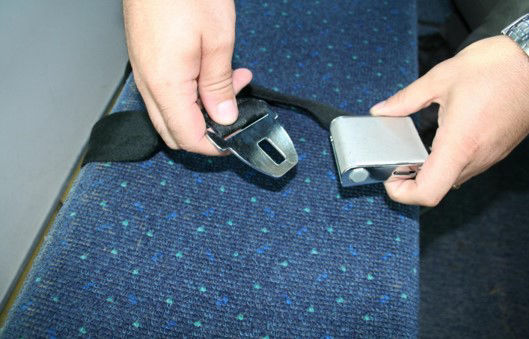
Skydivers, just like any other passenger in an
aircraft, are told to strap their seatbelt on before the local dropzone’s aircraft starts
moving. As a matter of fact, it is required by the Canadian Aviation Regulation (CAR) and
the Federal Aviation Regulation (FAR). So, whether you are flying in a Canadian or American
registered aircraft, seatbelts are mandatory.
From what I have observed, a vast majority of skydivers take the time to strap
themselves to the airplane. We religiously do it because we know that it can save our lives.
If you have been jumping at different locations, you
might also have noticed that dropzones use different altitudes at which you can release your
seat belt. Some may use 1000 feet while others use 1500 feet… but are those altitudes high
enough? Are they based on any kind of experimentation, minimum pulling altitudes or just old
habits? Is there science involved or is it just based on old rules from the times when everyone
was jumping out of dirty old piston single engine bugsmashers?
I am not by any means writing this as criticism of what I have been observing but rather
as a conversation catalyst in order to reflect on the fact that our procedures may not have
evolved at the same pace as our means of getting up to jump altitude.
So for this exercise we will always assume that the aircraft has not lost structural
integrity and we will take a minute to observe and appreciate a few factors in order to answer
this safety question:
1- Is there any kind of regulation concerning the minimum altitude to release seat
belts?
2- Are there CSPA recommendations concerning seat belts?
3- When and how high is it safer to stay in the aircraft than to bail-out?
4- Should the minimum altitude for seat belts be the same for all aircraft?
Rules and Regulations
The CARs and FARs both describe the mandatory use of seat belts for movement on the ground,
takeoff and landings (CAR 605.25 and FAR 91.107). Which brings the question, up to what altitude
are you still in the take off phase? The regulations define take off as the ground run and the
acts immediately preceding and following the leaving of the surface. (Not very precise)
Recommendations
The CSPA and USPA recommends that jumpers remain seated with the seat belt
fastened to 1500 feet (MIP2A page 59 and USPA Manual page 115) unless otherwise recommended by
the DZ, but again, this is a recommendation and not a law.
Also, the CARs and FARs state that the pilot in command has the final authority on what
ultimately happens in the airplane. So, legally, if the Pilot is ok with it, you could get rid
of your seat belt by 200 feet… but although it is legal, it might not be very safe…
What would be the minimum safe altitude to bail out?
It’s a hard question to answer and I don’t think there is only one correct
answer since the safety of the bail out procedure depends on many factors:
â— The type of airplane;
â— The nature of the emergency;
â— The number of skydivers in the plane (thus, time to complete the airborne evacuation);
â— The type of surface you are overflying;
â— The experience of the skydivers; and
â— The type of jump.
In case of a bail out, the CSPA recommends the main canopy activation down to 2500 feet and
the reserve activation between 2500 and 1500 feet. No one gets out below 1500 feet. (MIP 2A page
73-74).
It is also interesting to think that most skydivers have never opened their canopies
(themselves) below 2000 feet and that most of us have never trained to bail out at very low
altitude.
What about the type of load and airplane?
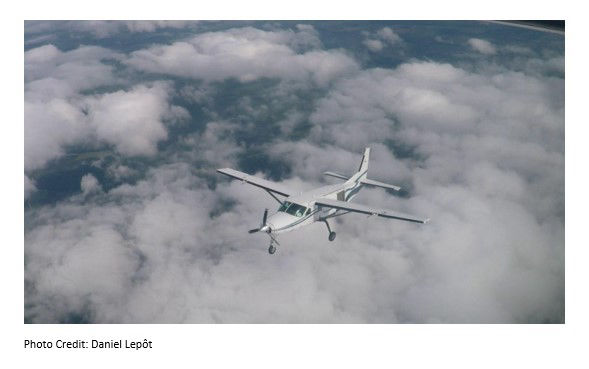
You can imagine that if an engine fails on a Cessna Caravan with 16 jumpers
onboard, the bail out will take a lot more time than on a C182 with 4 jumpers onboard. Also, for
the same two airplanes, a full load of experienced skydivers will take less time than a load of
less experienced jumpers. And how about Tandems and AFF students?
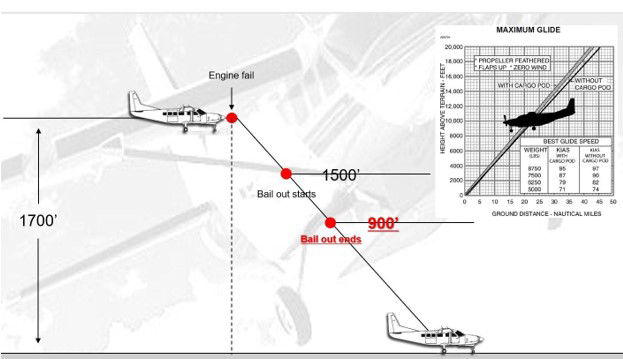
Let’s take an example and analyze an engine failure or fire on initial climb at 1700 feet onboard a Caravan. The time required for the pilot to identify the failure, take initial actions, call the bailout, skydivers to react, open the door and the first few ones to get out, it is realistic to say that the last jumpers will jump well below 1500 feet. (maybe even below 1000 feet if the prop does not get feathered fast enough). At that point, it may become much safer to land with the gliding airplane.
Consider that same emergency, but the pilot now
calls for an emergency landing with jumpers onboard (as he may choose for many reasons) and you
have already rushed to untie your seat belt at 1500 feet like most jumpers do. You are now
nervous, surrounded by a bit of chaos, maybe in some kind of a shock and now struggling to get
the dang seat belt back through your tight leg strap. As we know, it’s already a challenge to
find your seat belt on a full load on the ground on the best of days.
With airplanes, size does matter… as all pilots will tell you!
Some of our favorite skydive airplanes like the Twin Otter and the Caravan are literally
“flying tanksâ€. They have amazing takeoff and landing performance and their tough landing
gears can make any off-field emergency landing as smooth as an airliner greaser on a paved
runway. I have been flying these planes for decades and I can tell you I would not be scared to
land one of them fully loaded on an unimproved field.
Some twin engined airplanes (like the Twin Otter)
might also be able to maintain altitude or even climb a bit if one engine fails, depending on
the load and the temperature. So what’s the rush?
To bail out or not to bail out… that is the question!
To sum up the idea, the goal of allowing ourselves to jump off a bad airplane is to reduce
the risks that the problem initially brought. The emergency jump is in a way, our ticket to a
safer landing. But as you may already have realized, bailing out might not always be the best
way to assure the safest landing.
When was the last time you trained a low level bail out with an off field landing?
Jumping at low altitude, deploying your reserve with absolutely no separation form the 15 other
jumpers and landing on an unknown surface might all be factors that increase the risk to an
unacceptable level compared to landing with the airplane.
Keep in mind that pilots are trained to perform forced landings and will most likely be
able to glide to a decent place to land, like a freeway or a nice level field. The risk of
injuries are then reduced significantly…as long as you wear you seatbelt. Also, the airplane
itself provides you with protection in case of impact with obstacles like trees or powerlines.
Want to get that big door open? Maybe not!
Of course, as jumpers we have the reflex of leaving a “sinking boat†as soon as we smell
water but it might not always be a good idea to open that big door without your pilot’s call
for bail out.
In fact, sometimes your pilot might want to keep that door closed for many reasons. In
addition, that big jump door, once opened, creates a huge hole on the side of the airplane
affecting its aerodynamic properties, significantly increasing drag and adversely affecting its
glide ratio. In other words, you are screwing with the pilot’s time to react and get you
safely down to a smooth landing.
The uncommented opening of the door might have disastrous effects in some situations
like reigniting an electrical cabin fire that was under control or spreading oxygen on a shorted
wire under the instrument panel. (As described in MIP2A)
Believe it or not, jumpers scare easily, and that’s bad!
As a pilot taking off and landing 20-25 times a day, I have always been amazed how some
jumpers are scared senseless of landing with the airplane. It makes me grin… I have been
landing private or commercial passengers’ airplanes for 27 years and never got hurt!
Anyway, this nervousness is in some way understandable since jumpers like to land on their
own and have not very often landed with a jump plane. Nevertheless, this nervousness may become
overwhelming stress in a real emergency situation and translate in an uncontrollable urge to get
out even when it could have disastrous consequences on the following events.
Safety meeting’s meat and potatoes
I feel lucky that my dropzone considers this an important enough subject to invite me, the
pilot, to talk about airplane safety and evacuations during the annual emergency procedure
review or during AFF ground school. It gives us a chance to discuss these topics and sometimes
raises good questions. I would suggest that all DZ discuss airplane emergencies as part of their
jumper briefings. Also, DZ managers should evaluate the proper seat belts altitude according to
at least the following factors:
1. Area of operation (availability of landing sites)
2. Type of airplane and time available for bail out
3. Types of load (Tandems, students, regular jumpers)
Summing it up
There are many different factors affecting the lowest safe altitude to untie your seatbelt.
Whether it is regulations, recommendations, aircraft performance, nature of the load, local
dropzone rules or just plain logic.
In some situations it is also much safer to land with an airplane than it is to bail-out
(as strange as it may seem to jumpers and DZOs…). In those particular scenarios, having to
find and tie-up that seatbelt might take some time and represent quite a challenge. Whether
inside or outside the aircraft, altitude equals time. Why not give yourself time and keep it
tight until you have enough altitude?
Most skydivers never thought twice about the rationale behind the magic altitude at
which they get their seatbelts off… other than because the audible altimeter reminded them to
do so. I hope I was able to stir that pot enough with my own (very personal) pilot and jumper
perspective to make a few comments or questions pop-up at your local dropzone!
Joe Brunet
Airline Transport Pilot TC, FAA
CSPA D Licence, C1, C2
Chief pilot,
Ecole de Parachutisme Voltige Inc.